Camping in Normandy - History, Coastline, and Authentic France
Normandy offers a distinctly different French camping experience, where dramatic coastal landscapes meet profound historical significance and authentic rural charm. This northern French region combines stunning beaches, medieval architecture, world-renowned historical sites, and a rich culinary heritage that creates truly memorable holidays for families, couples, and friends.
Stretching along the English Channel from the Cotentin Peninsula to the Seine estuary, Normandy's diverse regions—Haute-Normandie (Upper Normandy) and Basse-Normandie (Lower Normandy)—deliver exceptional camping experiences. The coastline features dramatic white cliffs, expansive sandy beaches, charming fishing ports, and those historically significant D-Day landing beaches that changed the course of history.
Why Choose Normandy for Camping
Normandy's proximity to the UK makes it exceptionally accessible, with ferry connections to Cherbourg, Le Havre, Ouistreham, and Dieppe, plus the Channel Tunnel offering straightforward access. This convenience allows families to maximize holiday time while minimizing travel stress.
The region's climate offers pleasant summers without the intense heat of southern France, making it ideal for active holidays exploring historical sites, coastal paths, and charming villages. The temperate weather suits families with young children and those who prefer comfortable temperatures for outdoor activities.
Normandy's authentic French character remains wonderfully intact. Traditional villages showcase half-timbered houses, local markets brim with regional produce including famous Normandy cheeses and ciders, and the pace of life reflects genuine rural French culture rather than tourist-focused commercialization.
Camping Regions in Normandy
Calvados represents Normandy's most historically significant region, where Allied forces landed on June 6, 1944. Campsites near the D-Day beaches provide ideal bases for exploring this profound history while enjoying beautiful coastal settings.
The landing beaches—Omaha Beach, Utah Beach, Juno Beach, Gold Beach, and Sword Beach—stretch along approximately 80 kilometres of coastline. Excellent museums, memorials, and preserved fortifications bring history vividly to life, including the American Cemetery at Colleville-sur-Mer and British Cemetery at Bayeux.
Bayeux serves as an ideal base, famous for the remarkable Bayeux Tapestry depicting the Norman Conquest. This beautifully preserved medieval town offers excellent camping facilities within easy reach of the landing beaches. Arromanches-les-Bains showcases remnants of the Mulberry Harbour with powerful 360-degree films about D-Day operations.
The elegant Côte Fleurie resorts of Cabourg, Houlgate, Deauville, and Trouville-sur-Mer offer Belle Époque architecture, beautiful beaches, and sophisticated coastal atmospheres. Nearby campsites provide access to these charming destinations at reasonable rates.
The Manche department offers wild coastal beauty and France's most iconic landmark: Mont Saint-Michel. This UNESCO World Heritage medieval abbey perched on a rocky island creates unforgettable experiences. Nearby campsites in Pontorson and surrounding villages provide convenient access.
Cherbourg serves as a major ferry port with maritime heritage including La Cité de la Mer ocean discovery center. The west coast around Barneville-Carteret offers wild Atlantic beaches and authentic fishing villages. Granville, the "Monaco of the North," features lovely beaches, a charming old town, and the Christian Dior Museum.
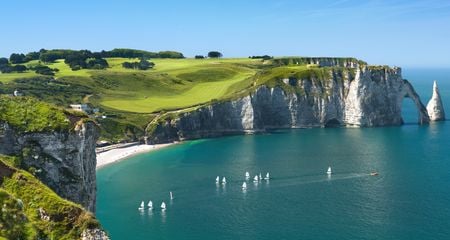
Seine-Maritime in Upper Normandy features the dramatic Côte d'Albâtre (Alabaster Coast), where soaring white chalk cliffs create spectacular scenery. Étretat represents the coast's jewel with famous chalk cliffs and natural arches that inspired Impressionist painters including Monet.
Fécamp combines fishing port authenticity with the Benedictine Palace heritage. Dieppe, the closest French port to England, features a long pebble beach and renowned Saturday morning market. Le Havre showcases remarkable UNESCO-listed post-war architecture.
Inland Eure features gentle countryside and proximity to Rouen, Normandy's historic capital. Rouen captivates with its magnificent Gothic cathedral, medieval quarter, and Joan of Arc heritage. The Seine Valley includes Giverny, where Monet created his water lily masterpieces in beautifully preserved gardens.
Orne represents rural Normandy's heart with gentle hills, traditional farms breeding famous Percheron horses, and authentic market towns including Alençon and Argentan. Campsites deliver peaceful countryside experiences ideal for exploring regional parks and cheese-producing areas.
Exceptional Campsite Facilities
Normandy campsites range from family-run sites emphasizing personal service to larger establishments featuring comprehensive facilities including heated swimming pools, water slides, children's play areas, sports facilities (tennis, mini-golf, table tennis), entertainment programmes during summer, and modern sanitary facilities.
Given Normandy's occasional rain, many quality campsites include indoor pools and covered activity areas ensuring entertainment regardless of weather. Mobile homes come fully equipped with heating for cooler periods, ensuring year-round comfort.
On-site amenities typically include restaurants serving regional specialties, bars with convivial atmospheres, mini-markets stocking fresh bread and essentials, bicycle rentals for exploring Normandy's excellent cycling routes, and fishing opportunities at many riverside and coastal locations.
Family-focused campsites feature kids' clubs with age-appropriate activities, playgrounds with quality equipment, organized sports tournaments, evening entertainment including shows and themed dinners, and safe environments where children make friends and create holiday memories.
Normandy's Unmissable Attractions
D-Day Landing Beaches and Museums: The beaches where Allied forces landed on June 6, 1944, now feature world-class museums including the Caen Memorial Museum providing comprehensive D-Day and Battle of Normandy context, the Utah Beach Museum, the Airborne Museum in Sainte-Mère-Église, and the Overlord Museum. These sites create profoundly moving educational experiences for all ages.
Mont Saint-Michel: This architectural marvel ranks among Europe's most spectacular sites. Visiting during different tidal conditions, exploring the abbey's Gothic halls, and wandering medieval streets creates magical experiences. Early morning or late evening visits avoid peak crowds.
Historic Towns: Bayeux with its famous tapestry and beautifully preserved medieval center, Honfleur's picturesque Vieux Bassin harbor that enchanted Impressionist painters, Rouen's Gothic splendor and Joan of Arc heritage, and Caen's impressive Norman ducal castle and abbeys founded by William the Conqueror.
Coastal Beauty: The dramatic chalk cliffs at Étretat, the elegant Belle Époque architecture along the Côte Fleurie, wild beaches of the Cotentin Peninsula, and charming fishing ports including Barfleur (voted one of France's most beautiful villages) and Port-en-Bessin with its active fishing fleet.
Culinary Heritage: Normandy's gastronomic reputation centers on exceptional dairy products—Camembert, Pont-l'Évêque, Neufchâtel, and Livarot cheeses—produced in traditional farms. Apple orchards yield cider and Calvados apple brandy, while the coast provides excellent seafood including oysters, mussels, scallops, and sole. Many campsites organize visits to cheese farms, cider producers, and local markets.
Gardens and Nature: Beyond Monet's Giverny gardens, Normandy features numerous exceptional gardens taking advantage of the mild, moist climate. The Cotentin coast hosts the Botanical Garden of Vauville with exotic plants, while inland areas feature traditional manor house gardens and arboretums.
Practical Advantages
Normandy's accessibility from the UK via multiple ferry routes and the Channel Tunnel eliminates flight requirements, allowing families to bring bicycles, camping equipment, and personal items without luggage restrictions or additional costs. The short crossing times mean holidays commence quickly without extensive travel fatigue.
The climate suits British visitors accustomed to temperate conditions. Summer temperatures average 18-22°C, comfortable for outdoor activities without overwhelming heat. Rain showers occur but rarely persist all day, and the changing light creates beautiful atmospheric conditions particularly appreciated by photography enthusiasts.
English language capability is reasonably good in tourist areas, though attempting French phrases is appreciated. The cultural familiarity—shared history, similar landscapes, familiar products—helps visitors, particularly those new to continental camping, feel comfortable while still experiencing authentic French character.
Value remains excellent, with Normandy offering quality camping experiences at competitive rates. Ferry crossings, campsite fees, and living costs compare favorably with UK holiday equivalents while delivering superior weather probability and richer cultural experiences.
Seasonal Considerations
Summer (July-August) offers warmest weather and fullest campsite operations including entertainment programmes, though this is peak season with higher prices and advanced booking requirements. The weather is most reliable, and all attractions operate full hours.
June and September provide excellent alternatives with pleasant weather, quieter sites, competitive pricing, and adequate warmth for beach activities and outdoor exploration. These months suit families with scheduling flexibility or those seeking tranquility.
May and October extend the season for hardy visitors, with spring flowers or autumn colors enhancing countryside beauty. Coastal weather remains changeable, but inland Normandy offers pleasant conditions. Historical sites and museums operate year-round, ensuring activities regardless of weather.
Normandy camping holidays deliver unique combinations of profound history, dramatic coastal beauty, authentic French culture, excellent accessibility, and comprehensive campsite facilities. The region suits families, couples, and friends seeking substance alongside scenery—where every visit enriches understanding while creating cherished memories.